The Role Of AI in Enhancing E-Voting PlatformsArtificial intelligence has found its
roots in transforming every business across the globe. The election process is
also not untouched, and AI has enhanced E-ele
Read More
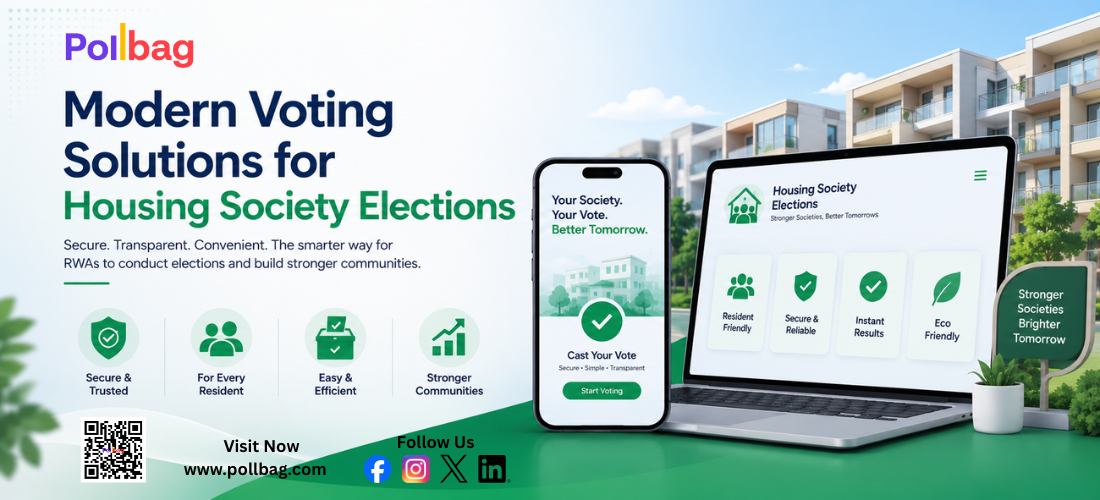
Modern Voting Solutions for Housing Society Elections
Residential housing communities organise housing society elections to select representatives who oversee various aspects of society management and welfare. These elected members would be responsible for addressing residents' concerns and managing community resources. These representatives maintain common facilities and ensure that all rules are upheld for the smooth functioning of the residential society.
An e-voting system is also best used for elections in educational institutions, corporate organisations, trade unions, professional associations, clubs, and NGOs. It is well established that the use of university election software or RWA member election websites is not restricted to any gadget or operating system, which means that they are compatible with Android phone devices or iOS devices without hassle.
It is a secure, transparent, and efficient method that can be applied to manage all elections in a secure way.
What is the need for digital elections for group housing societies and RWAs?
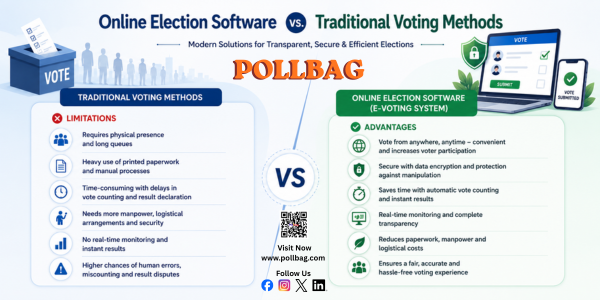
Housing societies today have evolved and always look for smarter ways to conduct their elections. This is why RWAs across India are now shifting to the more efficient e-voting. The problems faced by traditional voting systems in group housing are many, such as stress and confusion in manual voting. Sometimes, long queues, never-ending arguments, and noisy gatherings are a part of the RWA voting system that creates frustration for residents as well as committee members. But low participation of resident voters has always been the biggest drawback in ballot-paper elections for RWAs.
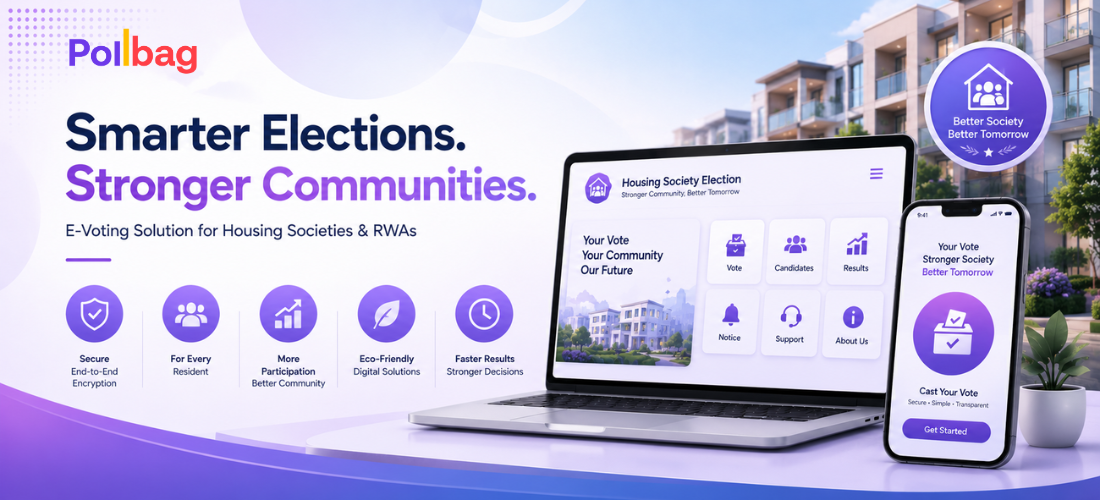
All this makes e-voting the first option and an alternative to outdated manual voting for RWA’s elections.
The following are some features that allow e-voting to be the first choice for RWA elections:
1. Highly convenient
Residents can cast their votes using their personal gadgets like smartphones, tablets, or computers and can vote from their preferred locations during the voting period.
2. Risk of proxy votes eliminated
Society elections e-voting only allows authentic residents to vote, so proxy votes are not possible. It happens because a unique ID, mobile number, or email is required to log in to the voting portal.
3. Instant result generation
Resident welfare association elections have automatic vote counting, and the results are declared immediately after the voting period ends. Thus, this election process is faster and more accurate than traditional resident association voting.
4. Cost-effective solution
Society elections’ online process reduces expenses that are associated with printing ballot papers, arranging polling booths, and hiring election staff. So, it saves the RWA a lot of money.
5. Eco-friendly operation
E-voting minimises the use of paper, voter lists, election notices, and other physical documents. It also supports a sustainable environment.
6. Long-term data storage
Election data consists of election records, the voters’ data, and the final result. All this resident information can be securely stored and retained whenever it is required.
7. Hassle-free elections
Electronic housing society voting is hassle-free as it reduces administrative burden. Vote counting is fast and saves time.
8. Reduced manual errors
In RWA e-voting, the mistakes that may occur due to manual vote counting or record maintenance are reduced completely. The result tabulation is automated, and there is no manual error.