The Role Of AI in Enhancing E-Voting PlatformsArtificial intelligence has found its
roots in transforming every business across the globe. The election process is
also not untouched, and AI has enhanced E-ele
Read More
Run Student Elections Easily with Pollbag
The elections are a valuable opportunity for students to participate in the democratic process. The student voting system is meant to nurture future leaders who will become public figures tomorrow and take on greater responsibilities in academic, professional, and social life. The university elections have always impacted students' lives, as they instill decision-making skills in them. It plays an important role in shaping their career responsibilities and leadership qualities. The students learn essential communication, problem-solving, and leadership skills with such organisations' activities.
The introduction of e-voting technology, with the use of student voting software for conducting school and college student elections, can be a revolutionary alternative to traditional, slow manual elections. Also, in conducting other elections like corporations, associations, and organisations, adopting the online voting service is always a great help as it leads to a transparent and secure election process without depending on lengthy and erroneous manual procedures.
With the advent of e-voting, educational institutions are now conducting reliable elections in an organised manner. Here, the paperwork is reduced, and administrative efforts and election-related costs are also decreased. It is a platform where students can conveniently cast their votes using their smartphones, tablets, laptops, and other gadgets, making participation more accessible. Even accessing university election software, employee union elections, or RWA member election websites is easy now on Android phone devices or iOS devices without hassle.
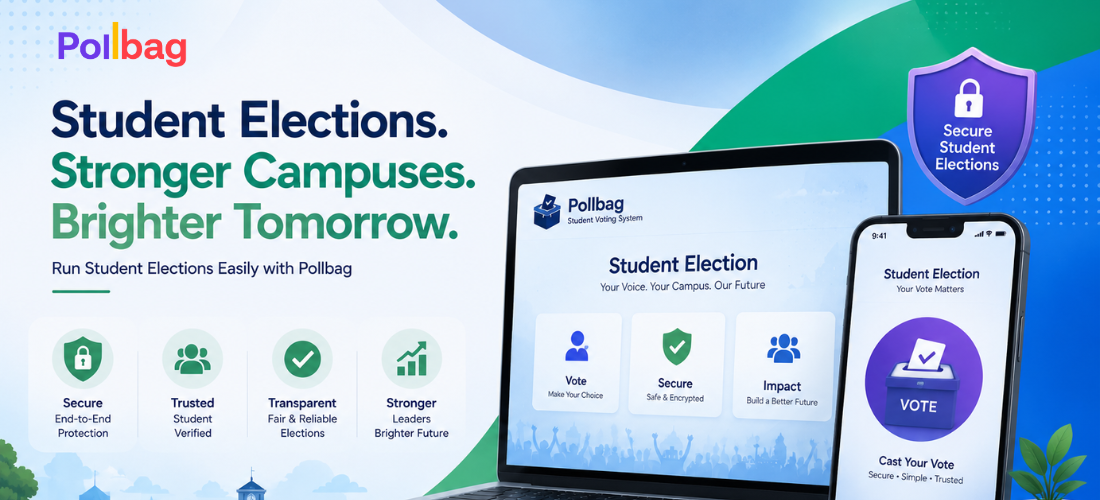
Key features of using a university election software for e-voting in student elections
1. Secret ballot
It protects the confidentiality of voters and allows the completion of an unbiased and democratic election process.
2. Audits and checking
It is a feature that maintains the transparency of student voting in student voting software. There is always a method available that helps to verify and scrutinise the internal process of student voting, and it also builds trust among students.
3. Voter receipt generated
A digital voter receipt is provided to each student for each vote cast. The university's election software has a feature that gives students an official confirmation of their vote participation.
4. Voter selfie verification
It clicks a photograph of the student voter when he/she is involved in the voting process, and this is called a “voter's selfie." It is an important layer of identity verification that confirms that only an authorised student has participated in the voting process.
5. Double authentication.
It is an important multi-layer verification for every voter in a student election. When a voter selects a candidate from their digital device, it ensures that only authenticated voters have participated.
6. Security
End-to-end data encryption and multi-level security protect the entire voting process from manipulation and data breaches. It is important to maintain the integrity of the election.
7. Geotagging
This feature records the different geographical locations of the voters and increases the security layer in democratic student elections. This additional verification layer keeps a check on voting activity and identifies suspicious access patterns of spurious voters.
8. Unique IP address
It ensures the uniqueness of every voter's IP address, thus preventing duplicate participation, and conducts elections in a fair and transparent environment.